


Table of Contents
We’ve been wanting to build this one for a long time.
Bellagio is the first Showit wedding stationery website template we’ve ever released. Bellagio pairs refined, paper-inspired design with a structure built to convert, made for creatives who want a website as considered as the work they put into the world.
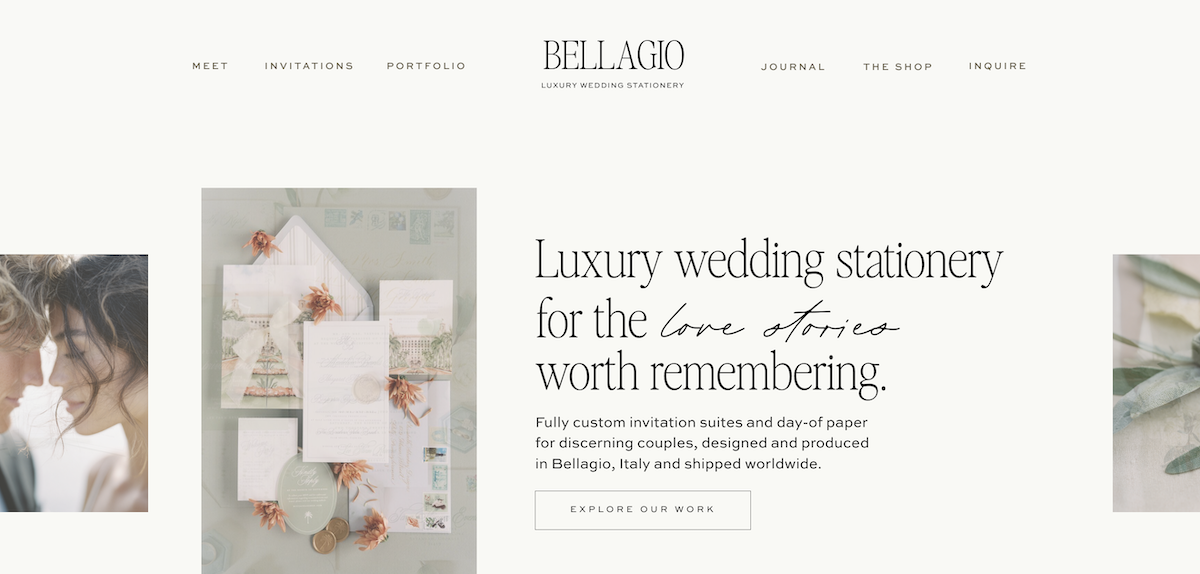
Every page, every layout, every little detail was designed specifically around how a stationery designer actually works and how a couple actually shops for custom invitations.
And for those of you who love the template that are not wedding stationers, Bellagio comes in three variations, one for stationery and invitation designers, a general one, and one for wedding pros so you start from whichever feels closest to your work and make it yours from there.
Here’s a look inside.
Designed Around the Invitations, Not Around the Photos
Most website templates are built photo-first. Big, bold images stacked behind text, layered with overlap, designed to carry a portfolio of photography.
That approach doesn’t work for invitations. Invitation suites are visually busy by nature. They have texture, type, and detail packed into a small space, and they get lost the moment you try to use them as a background image behind text.
So this Showit wedding stationery website was built the opposite way. There’s minimal overlap throughout the site, which means every invitation suite gets to stand on its own. Nothing competes with the paper. The site stays calm so the work can be the loudest thing on the page.
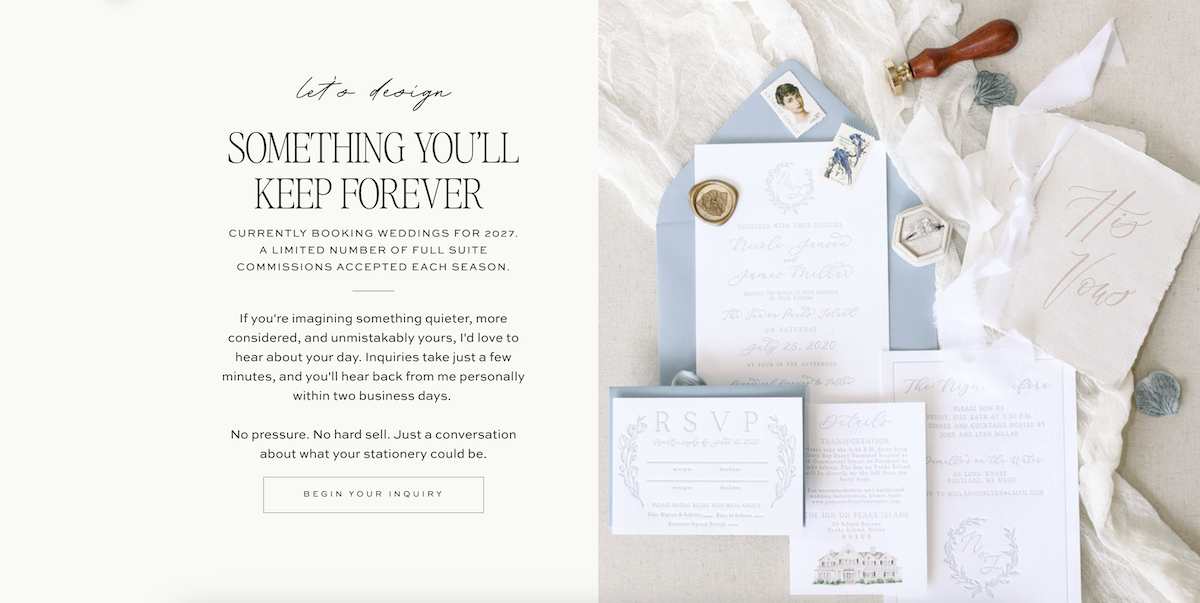
If you’ve ever tried to force a photography template to showcase flat lays and stationery details, you already know why this distinction matters.
Stationery-Inspired Details, Built to Be Swapped
Scattered throughout the site are small design touches that feel pulled straight from a stationery suite. A delicate flower motif. A soft wavy oval. Little paper-inspired flourishes that echo the kind of details you’d find on an actual invitation.
These aren’t locked in. Every one of these elements can be swapped out for a designer’s own brand elements, so the site can carry someone else’s signature details without losing the structure that makes it work.
Two Custom, Licensed Fonts You Won’t Find Anywhere Else
The typography in this Showit wedding stationery website isn’t pulled from a standard font library.
We licensed two custom fonts specifically for this template from Jen Wagner, who is hands down one of the best typewriter-style and hand-lettered font designers working today. One is a beautifully fluid, handwritten script. The other is a bold, editorial headline font we’ve been calling “perfectly nineties,” with just enough vintage character to feel timeless rather than trendy.
Together they give Bellagio a typographic personality that feels custom from the very first scroll, without anyone having to touch a single font file.
Starter Copy in Every Section
One of the hardest parts of moving into a new template is the blank page problem. You can have a beautiful layout and still freeze the moment you have to write the copy.
Bellagio solves this with starter copy built into every section of the site. It’s not filler text. It’s directional copy meant to show a stationery designer what kind of message belongs in each section and what a couple actually needs to know at that point in the page.
It’s the difference between staring at a blank section and having a clear jumping-off point to make it your own.
A Home Page Built to Introduce Every Service
The home page includes a dedicated spot to introduce all of the different services a stationery designer might offer. Custom invitation suites, day-of paper goods, reception signage, and more, each one linking out to a deeper page.
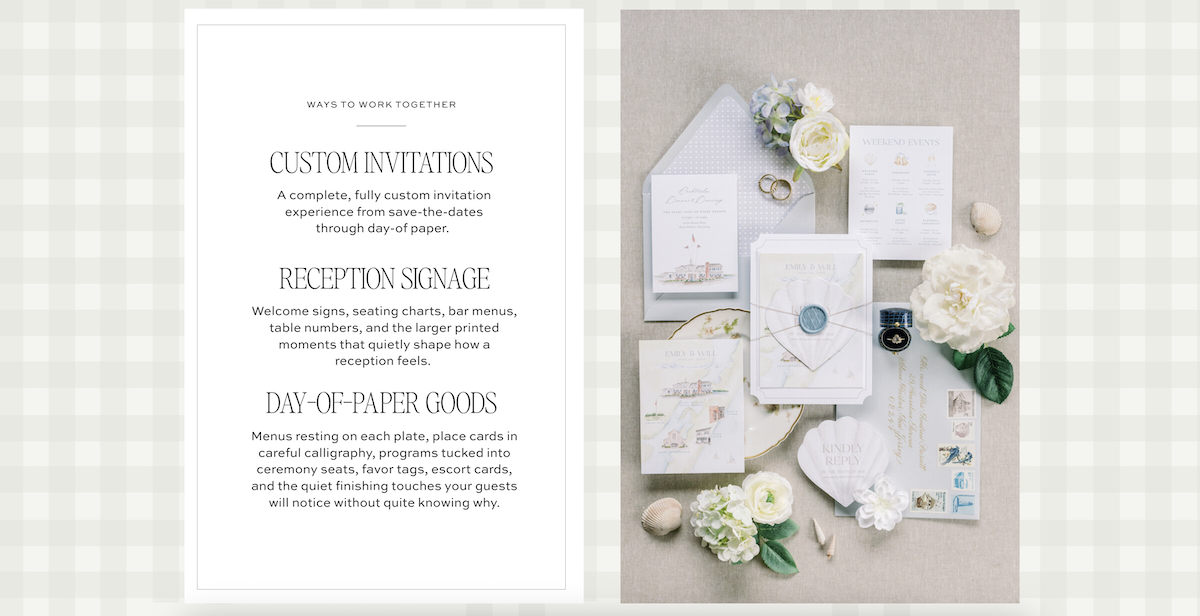
Many couples don’t know everything a stationer offers until it’s spelled out clearly. This Showit wedding stationery website makes sure that information is front and center.
Scrapbook-Inspired Spaces for Projects and Testimonials
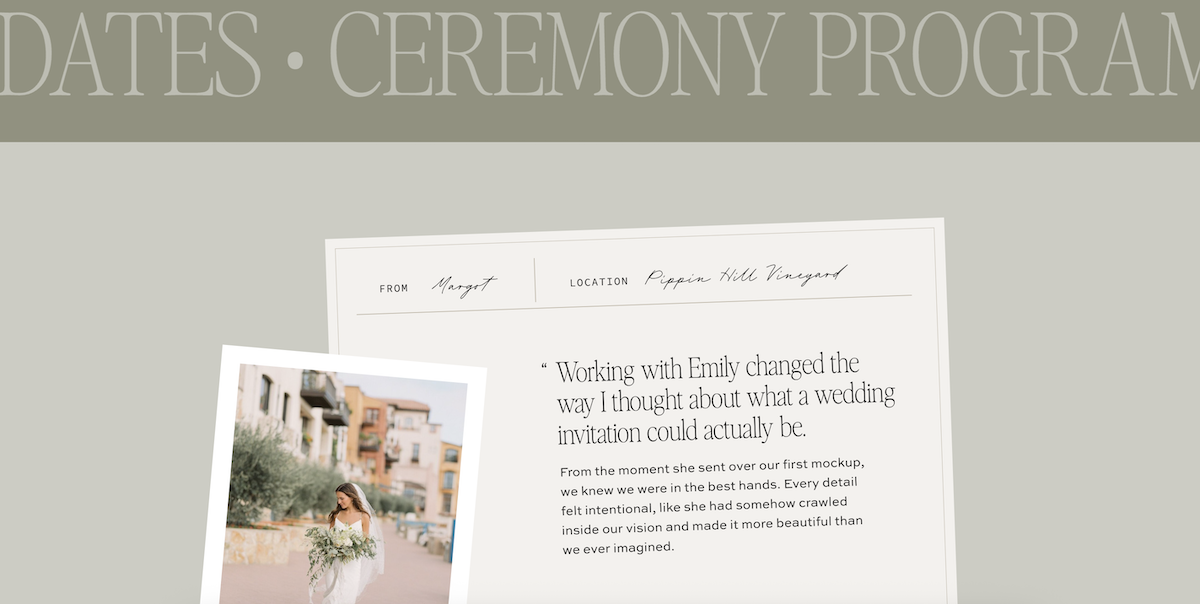
Beyond the standard portfolio grid, Bellagio includes a handful of paper-inspired, scrapbook-style layouts built specifically to showcase testimonials and featured projects.
These sections feel a little more tactile and personal, like flipping through a beautifully kept memory book rather than scrolling a typical website. They’re a refreshing change from the standard quote-and-headshot testimonial block.
There’s also flexible space throughout for video, with the option to swap easily between video and photo depending on what a designer has on hand.
A Personality-Driven About Page
The About page was built to let a stationery designer’s personality come through, not just their resume. Overlapping photos, a scrapbook-inspired layout, and a tone that feels personal rather than corporate make this page feel like getting to know the person behind the paper.
There’s also a dedicated section for introducing team members, so studios that have grown beyond a solo designer have a place to showcase that.
The Invitations Page: Where the Real Selling Happens
This page is the anchor of the entire template, and it’s doing a lot of strategic work.
It includes a flat-lay-style illustrated breakdown of exactly what comes in an invitation suite. An envelope, an RSVP card, the invitation itself, laid out almost like a styled photograph so a couple can see precisely what they’re investing in before they ever inquire.
There’s a full process walkthrough too, taking a couple from their first inquiry through the discovery call, proposal, design phase, approval, production, and final delivery. Nothing about working together is left uncertain.
There’s also a built-in order timeline, designed to help couples figure out exactly when to place their order and when to mail their invitations based on their wedding date. It’s built with search intent in mind, the kind of structured, specific content that tends to perform well in Google’s featured snippets.
And there’s a full FAQ section answering the questions almost every couple has: revision rounds, international shipping, rush orders, and timeline expectations.
A Portfolio Designed to Keep People Scrolling
The portfolio page showcases invitation suites in a case-study format rather than a simple image grid. Each project gets context: the couple, the venue, the story behind the suite.
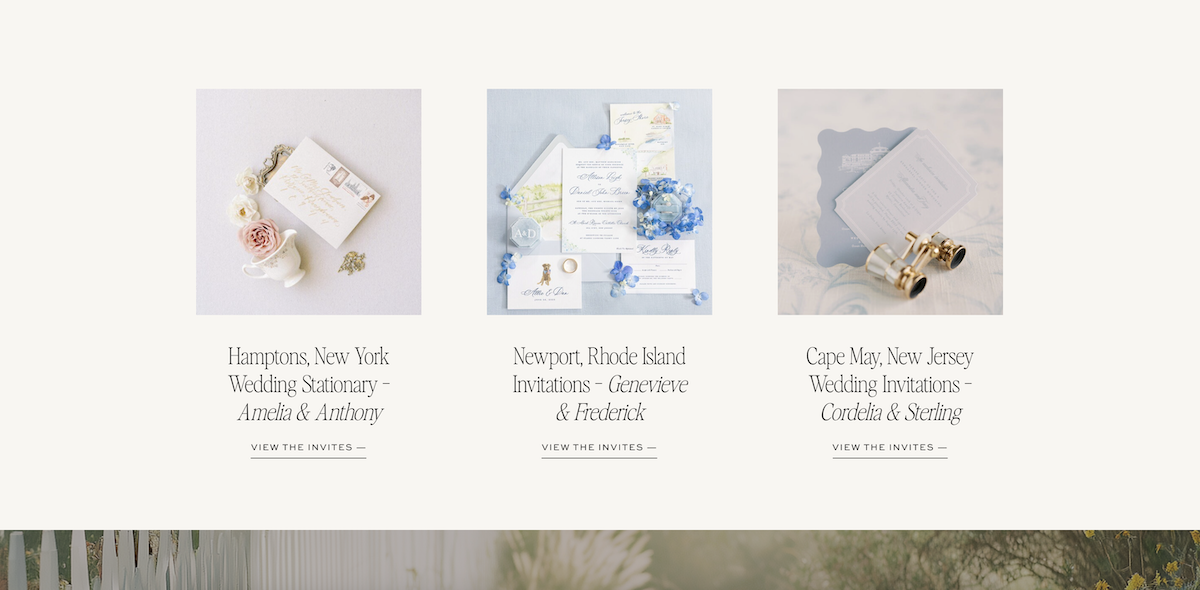
That format does double duty. It’s stronger for search, and it’s also just more engaging. People don’t glance at a beautiful flat lay and move on. They read the story, scroll a little further, and fall in love with the designer’s work along the way.
Everything Else You’d Need to Launch
This Showit wedding stationery website also includes a blog page for ongoing content, a built-in shop for designers who want to offer semi-custom invitations, and a lead magnet landing page for capturing emails from couples who aren’t ready to inquire yet but want more guidance.
It’s a genuinely complete site. Visually rich, intentionally structured, and ready for a stationery designer to move into without having to invent the strategy themselves.
Built for the Work You Actually Do
Bellagio exists because we kept watching talented stationery designers try to make a photography template work for a business that runs completely differently.
You’re not selling moments. You’re selling craft, paper, and a deeply personal keepsake. This Showit wedding stationery website was built with that distinction in mind from the very first layout decision, and it’s all built on Showit, the platform we know and trust most for creative businesses.
If you’re a wedding stationery designer who’s been waiting for a site that actually understands what you do, this one’s for you.
Explore Bellagio in our template shop
FAQs: Showit Wedding Stationery Website
What makes Bellagio different from other Showit templates?
Bellagio is the first Showit wedding stationery website template built specifically around invitation design, rather than adapted from a photography template. Every section, from the minimal image overlap to the included order timeline, was designed around how stationery designers actually sell and how couples actually shop for custom paper.
Can I customize the design elements in Bellagio?
Yes. The stationery-inspired details throughout the site, like the flower motif and decorative accents, can be swapped out for a designer’s own brand elements without disrupting the overall layout.
Does Bellagio include starter copy?
Every section includes directional starter copy to help guide a stationery designer through what to say and how to frame it, removing the blank-page overwhelm that usually comes with launching a new site.
Is Bellagio good for SEO?
Yes. The Invitations page in particular was built with search intent in mind, including a structured order timeline and FAQ section designed to perform well in search. The portfolio’s case-study format is also stronger for SEO than a standard image grid.
What’s included in the Bellagio template?
A home page, an in-depth Invitations page with a full process walkthrough and order timeline, a case-study style portfolio, a personality-driven About page, a blog, a built-in shop, and a lead magnet landing page.
What platform is Bellagio built on?
Bellagio is built on Showit, giving stationery designers full design flexibility along with WordPress-powered blogging and SEO once it’s customized to their brand.

Krista is the co-founder of Davey & Krista, a creative studio known for high-converting Showit website templates crafted for photographers, creatives, and entrepreneurs. With over 15 years of branding and marketing experience, she helps business owners launch stunning websites without the tech overwhelm. Krista also teaches designers how to turn their creative skills into a thriving business—through templates, courses, and behind-the-scenes strategy. When she’s not designing, you’ll find her chasing sunshine, color palettes, and gluten-free pizza.
Explore website templates and free resources at daveyandkrista.com.


VIEW THE COMMENTS
Add A Comment