


Table of Contents
There was a season in my design business where I had a portfolio full of work and an inbox that was almost completely quiet.
I kept adding projects. I kept refining the layout. I kept telling myself that if I just had a few more pieces, or if the site looked a little more polished, the inquiries would start coming. They didn’t. And it took me a while to understand why, because the problem wasn’t what I thought it was.
A design portfolio stops booking clients for four common reasons: it shows work you don’t want to be hired for, it shows the deliverable instead of the outcome, it doesn’t say who the work is for, and it never tells the visitor what to do next. Portfolio quantity is almost never the problem. Six focused projects outperform twenty scattered ones every single time.

If your portfolio feels like it should be working and somehow isn’t, let me walk you through what’s actually going on.
Why Isn’t My Portfolio Getting Inquiries?
Here are the four reasons I see most often, and the fix for each one.
You’re showing work you don’t want to be hired for. This is the most common mistake I see, and it’s the one with the most immediate fix. You get hired for what you show. If your portfolio includes three industries you no longer want to serve, two price points you’ve grown past, and one style that doesn’t represent where your work is now, you are actively attracting the wrong clients with every visit. Your portfolio is not a archive of everything you’ve ever done. It’s a curated argument for the work you want more of.
You’re showing the deliverable instead of the outcome. A logo on a white background. A website screenshot. A brand board. These are deliverables. They show what you made. They do not show what changed for the business that hired you. A portfolio that shows outcomes, that tells the story of who the client was, what they needed, and what became possible after the work was done, books at a completely different rate than one that just shows the files.
It doesn’t say who the work is for. If someone lands on your portfolio and has to spend more than five seconds figuring out whether you work with businesses like theirs, you’ve already lost them. The most effective portfolios signal their ideal client immediately. Not through a long paragraph in the about section. Through the work itself, the industries represented, the aesthetic, the kind of clients featured in the case studies.
There’s no clear next step. This one breaks my heart a little because it’s so fixable. Someone lands on your portfolio, they love what they see, they scroll through two or three projects, and then they reach the bottom of the page and there’s… nothing. No invitation to reach out. No button. No “here’s how to work with me.” A potential client who has to go hunting for your contact page is a potential client who is probably going to close the tab instead. Your call to action should be on every project page, not just the contact page.
How Many Projects Should Be in a Design Portfolio?
Six to eight. That’s the number.
I know that might feel like too few, especially if you’ve been designing for a few years and have a lot of work to show. But here’s what I’ve watched happen over and over: a portfolio with twenty projects that span three industries and four aesthetic directions tells a potential client nothing clear about who you are or who you serve best. A portfolio with six exceptional, focused projects that all feel like they belong together tells them everything.
More is not more in a design portfolio. More is just more noise.
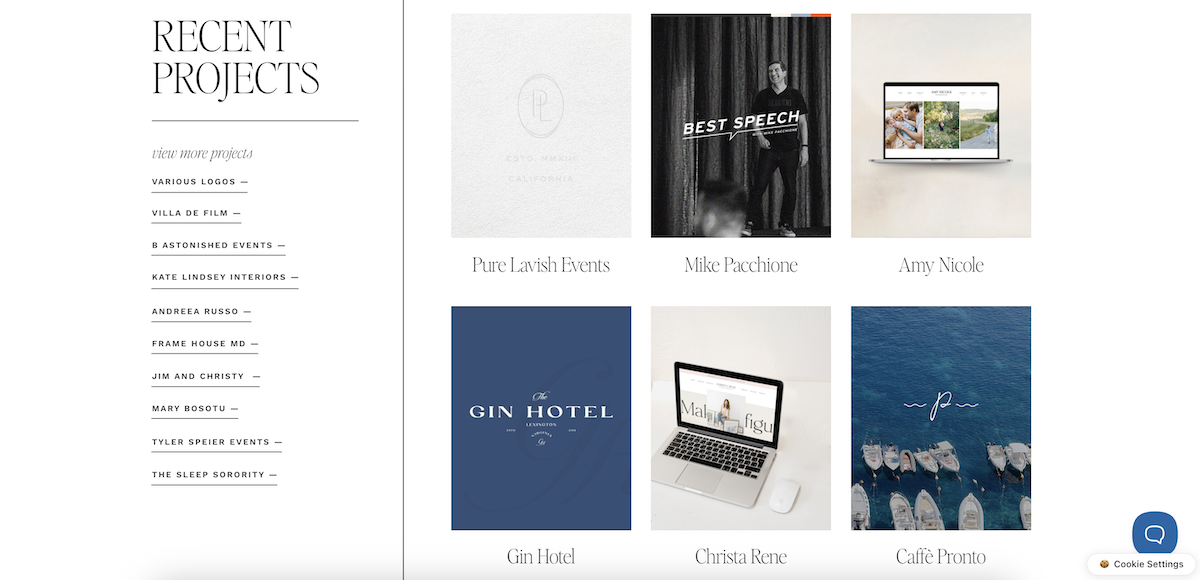
Six to eight projects, chosen carefully, curated intentionally, presented with context and story, will always outperform a gallery of everything you’ve ever done. Especially when those six to eight projects are the exact kind of work you want to keep doing.
Should I Show Every Project I’ve Done?
No. And I’ll say this as directly as I can because I think it matters: you get hired for what you show.
That sentence sounds simple and it is genuinely one of the most important things I could tell you about your portfolio. If you show e-commerce brands, you will attract e-commerce brands. If you show photographers, you will attract photographers. If you show a little bit of everything because you’re worried about narrowing your audience, you will attract a little bit of everything, which usually means inconsistent projects at inconsistent price points with inconsistent fit.
Every project in your portfolio is a casting call for future clients. Be intentional about who you’re inviting.
What Should a Case Study Actually Include?
Not a mood board dump. Not a gallery of every deliverable from the project. A case study is a story, and it has three parts.
The problem. Who was this client, what were they dealing with, and what was at stake for their business? This is the part most designers skip entirely, and it’s the part that makes a potential client think “that’s exactly my situation.”
What you decided and why. This is where your strategic thinking lives. Not just “I chose this color palette” but why that palette was the right choice for this client’s audience and positioning. Not just “I designed this layout” but what conversion problem that layout was solving. This section is what separates a designer from a decorator in the mind of a potential client.
What changed. What became possible for this business after the work was done? Did they raise their prices? Did they book a different kind of client? Did their inquiry volume go up? Did they finally feel like their brand matched the level of their work? These outcomes don’t have to be big dramatic numbers. They have to be real and specific.
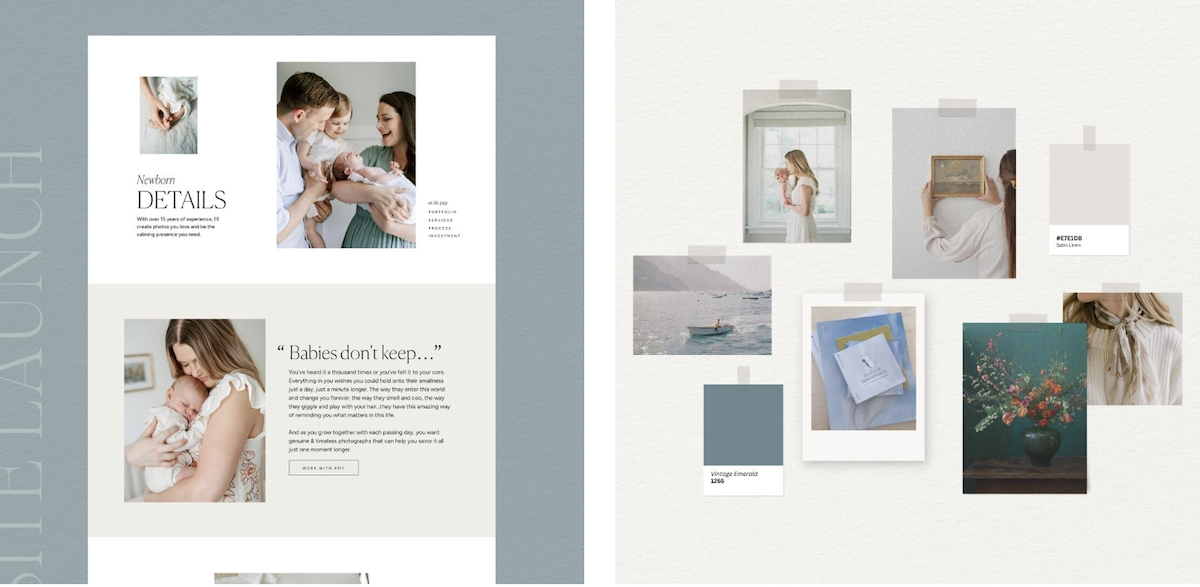
A case study structured this way does something a gallery of deliverables never can. It puts the potential client inside the story and lets them imagine what their own “what changed” could look like.
Should I Include Personal or Unpaid Work in My Portfolio?
Yes, with one condition. It has to be the work you want more of.
If you did a personal project to develop a skill or explore a style you want to bring to client work, and it genuinely represents where your work is headed, it absolutely belongs in your portfolio. Spec work, passion projects, and personal branding exercises can all be portfolio-worthy if they’re presented with the same care and context as paid client work.
What doesn’t belong is personal work that represents a direction you’ve moved away from, or unpaid work you took on just to have something to show, that doesn’t actually reflect the clients you’re trying to attract.
The question is never “was this paid.” The question is always “is this the work I want more of.”
Does My Portfolio Need Results and Numbers?
Yes. And I know the instinct is to think you don’t have them, but you almost always do if you ask.
Most designers finish a project, deliver the files, and never follow up. Which means they never find out that the client raised their prices the month after launch, or that their inquiry volume doubled, or that they finally booked the kind of client they’d been hoping for. That information exists. You just have to ask for it.
Here’s a simple email that works, even months after a project ends:
“Hi [Name], I’ve been thinking about our project lately and I’d love to hear how things are going. Has anything shifted in your business since the rebrand? I’m updating my portfolio and would love to include your results if you’re open to sharing.”
Most clients are genuinely happy to respond to this. They’re proud of their business and they want to support you. And the specificity of what they share, even something as simple as “I finally feel like my brand matches my work,” is more powerful in a case study than any generic testimonial.
Where Should the Call to Action Go?
On every project page. Not just the contact page.
This is the one I see missing most often, and it’s such a simple fix. When someone is at the bottom of a case study they loved, that is the highest-interest moment in their entire visit to your site. That is the exact second when they are most ready to reach out. And if there’s no invitation there, you’ve just let the warmest moment in the whole visit pass without doing anything with it.
Every project page should end with something like “Interested in working together? Here’s how to get started” followed by a clear link to your inquiry form or contact page. Not aggressive. Not salesy. Just a warm, obvious next step at the exact moment someone is ready to take it.
If you’re working through a portfolio overhaul and you want the full strategic framework behind building a design business that consistently attracts aligned clients, Booked by Design is a great place to start. And if you’re ready to go deeper on the offer, the positioning, and the systems underneath it all, Design Strategy School is where that work really happens.
FAQs
Why is my design portfolio not getting clients?
The four most common reasons a design portfolio stops booking clients are showing work you don’t want to be hired for, showing deliverables instead of outcomes, not signaling clearly who the work is for, and not including a call to action on project pages. Portfolio quantity is almost never the issue. Six focused, well-presented projects outperform twenty scattered ones.
How many projects should be in a design portfolio?
Six to eight is the right number for most independent designers. A smaller, focused portfolio of projects that all represent the work you want more of will book better than a large gallery that spans multiple industries and aesthetic directions. More projects is not more persuasive when the work isn’t cohesive.
Should I include unpaid or personal work in my design portfolio?
Yes, if it represents the work you want more of. Spec work and passion projects can absolutely be portfolio-worthy when presented with the same care and context as paid client work. The question is never whether the work was paid. The question is whether it’s the kind of work you’re trying to attract.
What should a design portfolio case study include?
A strong case study has three parts: the problem the client was facing and what was at stake for their business, what you decided and why which is where your strategic thinking shows, and what changed for the business after the work was done. This structure turns a gallery of deliverables into a story that helps potential clients imagine their own results.

Krista is the co-founder of Davey & Krista, a creative studio known for high-converting Showit website templates crafted for photographers, creatives, and entrepreneurs. With over 15 years of branding and marketing experience, she helps business owners launch stunning websites without the tech overwhelm. Krista also teaches designers how to turn their creative skills into a thriving business—through templates, courses, and behind-the-scenes strategy. When she’s not designing, you’ll find her chasing sunshine, color palettes, and gluten-free pizza.
Explore website templates and free resources at daveyandkrista.com.


VIEW THE COMMENTS
Add A Comment