


Table of Contents
You sent the proposal. You answered their questions. You even customized your pricing based on what they told you they needed.
And now? Nothing.
It’s been three days. Maybe a week. You keep checking your inbox, but there’s no response.
So what do you do? Do you follow up and risk looking desperate? Do you wait it out and hope they eventually get back to you? Do you just assume they went with someone else and move on?
Here’s what most people don’t realize: the follow-up email is where most sales actually happen. Not in the first email. Not on the discovery call. In the follow-up.
Because people are busy, distracted, and overwhelmed. Your email got buried. They meant to respond but forgot. They’re comparing options and haven’t decided yet.
Learning how to send a follow-up email after no reply isn’t about being pushy. It’s about being helpful, staying top of mind, and making it easy for someone to say yes.
Let’s talk about how to actually do it.
The Real Reason People Don’t Respond (It’s Not What You Think)
Before we get into how to send a follow-up email, let’s talk about why people ghost in the first place.
Most of the time, it has nothing to do with you.
They didn’t suddenly decide they hate your work. They’re not avoiding you because your prices are too high. They didn’t find someone better.
They’re just… busy. Or overwhelmed. Or waiting to hear back from their business partner. Or dealing with a family emergency you know nothing about.
The problem is that when you don’t follow up, you’re making an assumption about why they didn’t respond. And assumptions cost you clients.
When you know how to send a follow-up email after no reply, you’re giving people permission to re-engage without feeling awkward about the fact that they didn’t respond the first time.
You’re making it easy for them to pick up where you left off.
Your First Email Sets Up Everything That Comes After
Most people think the follow-up is where things go wrong. But actually, the problem usually starts with the first email.

If your initial response to an inquiry doesn’t have a clear next step, your follow-up emails won’t save you.
Here’s what we see all the time: someone inquires, and the response is something like:
“Thanks for reaching out! I’d love to work with you. Let me know if you have any questions!”
That’s not a call to action. That’s a passive hope that someone will magically know what to do next.
Your first email should tell people exactly what to do. Not “if you’re interested, let me know.” Not “feel free to reach out with questions.” Tell them the specific next step.
Here’s an example of a strong first response:
Hi Ashley,
Congrats on your engagement! We love shooting at the Magnolia Spring House. We actually shot there a few times last year, and you can check out one of our most recent weddings there by clicking this link.
I’ve attached some information about working with us below. Do you have any time to chat in the next few days? You can schedule a call using this link, or send over a few days/times that work.
We look forward to hearing from you! Please don’t hesitate to reach out if you have any questions.
See the difference? There’s a clear action. There’s social proof (linking to relevant work). And there’s a specific ask with an easy way to say yes.
When you set up your first email like this, your follow-ups become so much easier.
When to Send Your First Follow-Up Email (And How Many Times to Follow Up)
Here’s the mistake most people make: they wait too long.
You send your initial response, and then you wait a week to follow up because you don’t want to seem pushy. But by that point, you’ve gone cold. They’ve moved on, gotten busy, or booked someone else who followed up faster.
Send your first follow-up email within 24-48 hours if you don’t hear back.
Why? Because people usually reach out to multiple service providers when they’re hiring someone. And whoever follows up first (and most consistently) is usually who they book.
Your initial response should go out the same day they inquire. Your first follow-up should go out 1-2 days later if you haven’t heard anything.
After that, follow up every 2-3 days for at least 3-4 more attempts. Most research shows that it takes 4-7 touchpoints to get a response from someone. Most people give up after one or two.
Don’t be most people.
Mastering how to send a follow-up email means understanding timing as much as messaging. Too early feels desperate. Too late means you’ve lost them to someone else.
What to Actually Say in Your Follow-Up Email
This is where people freeze up. What do you say in a follow-up email that doesn’t sound desperate or annoying?
The key is asking a question that moves the conversation forward—not just checking in.
“Just checking in!” is not a follow-up. It’s filler. It doesn’t give someone a reason to respond.
Instead, ask a question that’s actually helpful:
Hi Dan,
Do you have any questions about the materials I sent over?
That’s it. Short, direct, and gives them a clear reason to reply.
You’re not saying “are you still interested?” (which sounds insecure). You’re not saying “just wanted to see if you got my email!” (which sounds passive). You’re asking if they need clarification on something you already sent.
This almost always gets a response. They either ask questions, or they take the action you mentioned in your first email (like scheduling a call).
When you’re learning how to send a follow-up email, simplicity beats cleverness every time. Keep it short, ask one clear question, and make it easy to respond.
How to Send a Follow-Up Email That Actually Gets Opened
If someone hasn’t responded to your first follow-up, your second follow-up needs to do something different.
Don’t just ask the same question again. Add new information. Create a reason to re-engage.
Here’s an example of a follow-up email you can send if your first few haven’t gotten a response:
Hi Emily,
Are you still looking for a photographer for your wedding this October? I shot a wedding this past fall at your venue that was recently published that reminded me to reach back out.
Do you have any time to chat this week? You can use this link to schedule a call, or send over a few days/times that work for you.
I’m looking forward to connecting!
See what happened there? You added value (mentioning recent work at their venue), created urgency (reminding them of the timeline), and made it easy to respond.
This is how to send a follow-up email that doesn’t feel like you’re just repeating yourself. Each one should bring something new to the table—a relevant portfolio piece, a deadline reminder, or additional context that makes responding worth their time.
Track Your Email Opens to Know When to Follow Up
If you want to get better at knowing how to send a follow-up email, start tracking whether people are actually opening them.
Tools like Mailtrack show you when someone opens your email, how many times they’ve read it, and whether they clicked any links.
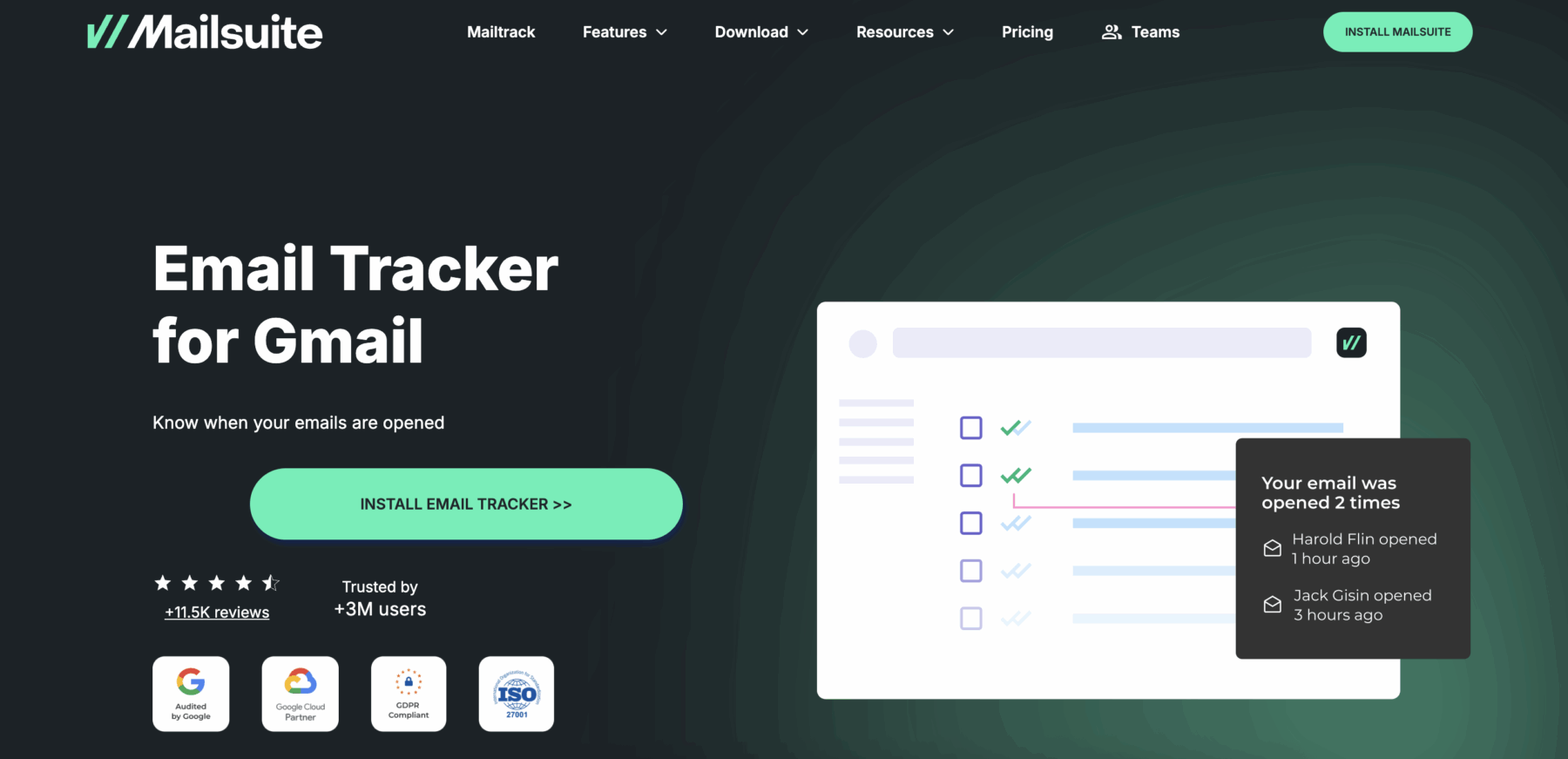
This gives you insight into what’s actually happening. If someone opened your email five times but didn’t respond, they’re interested—they just haven’t made a decision yet. That’s a very different situation than someone who never opened it at all.
When you know your email was opened multiple times, your next follow-up can address that: “I know you’re probably weighing a few options right now. Happy to answer any questions that would help you make a decision.”
The “Breakup Email” That Brings People Back
If you’ve followed up 3-4 times and still haven’t heard anything, it’s time for the final follow-up.
This is sometimes called “going negative” or the “breakup email.” It works because it flips the dynamic—instead of asking for a response, you’re assuming they’re not interested and giving them an easy out.
Here’s what it looks like:
Hi Ann,
I haven’t heard back from you so I’m assuming that you are no longer interested in a family photography session at this time. If something changes in the future, please let us know.
It feels a little abrupt, right? But that’s why it works.
People don’t like loose ends. When you send an email like this, it often prompts a response—even if it’s just to say “sorry, things got crazy” or “actually, I’m still interested, can we schedule that call?”
And if they don’t respond? Then you have your answer. You can stop following up and move on to the next lead.
This is one of the most effective strategies for how to send a follow-up email when everything else has failed. It’s called “The Magic Email” for a reason—it gets responses when nothing else does.
What to Do When Someone Says Yes (And Then Disappears)
There’s a special kind of frustration that comes when someone commits to working with you—and then ghosts after you send the contract.
It happens. But there are things you can do to prevent it.
Make sure you’re talking to all the decision-makers. If you’re a wedding photographer, get both people on the call. If you’re a designer working with a business, make sure you’re speaking with whoever actually signs the checks.
Give people a deadline. Don’t leave contracts open-ended. “I can hold your date for 24 hours” or “This proposal is valid for 72 hours” creates urgency.
Send the contract immediately. Don’t wait days after someone commits. Send it within an hour if possible.
Here’s an example of an email to send with a contract:
Hi Sara,
You can find the contract and invoice attached. Once you’ve signed the contract and paid the retainer, your date will be reserved! As a reminder, we can only hold your date for the next 24 hours.
Please don’t hesitate to reach out if you have any questions. We’re so excited to work with you!
Clear, direct, and includes a deadline. That’s how to send a follow-up email that actually gets contracts signed.
Knowing how to send a follow-up email after someone commits is just as important as the initial follow-up. This is where you keep momentum going and prevent people from disappearing right before they sign.
Track Your Follow-Ups (Or You’re Flying Blind)
If you’re not tracking your inquiries and follow-ups, you’re missing out on the most valuable data in your business.

You need to know:
- How many inquiries you’re getting
- How many require follow-ups
- What people say when they don’t book
- How many touchpoints it usually takes to get a response
- What questions people ask most often
This tells you where your process is breaking down. Maybe people keep saying you’re out of their budget—time to either raise your perceived value or find a different audience. Maybe everyone asks the same question—add that answer to your initial response.
You don’t need fancy software. A simple spreadsheet works. Track the inquiry date, when you followed up, what they said, and whether they booked.
Or use a CRM like Dubsado to automate your follow-ups and track everything in one place. Dubsado lets you set up automated follow-up sequences so you never have to remember to send them manually.
The Follow-Up Framework That Actually Works
Let’s put it all together. Here’s the framework for how to send a follow-up email after no reply:
Initial response (same day): Strong CTA, social proof, clear next step
Follow-up #1 (1-2 days later): “Do you have any questions about the materials I sent over?”
Follow-up #2 (2-3 days later): Add new information, create urgency, restate the CTA
Follow-up #3 (2-3 days later): Provide social proof, offer a specific time to connect
Final follow-up (2-3 days later): Breakup email – “I’m assuming you’re no longer interested”
That’s it. Five touchpoints over about 10 days. Simple, professional, and way more effective than sending one email and hoping for the best.
Your Follow-Ups Are Costing You Money (If You’re Not Doing Them)
The follow-up isn’t optional. It’s where the sale happens.
Most people give up too early. They send one email, maybe two, and then assume silence means no.
But silence just means busy. Or overwhelmed. Or waiting for the right time.
When you know how to send a follow-up email after no reply—and you actually do it consistently—you’ll book more clients, learn more about your business, and stop leaving money on the table.
Start tracking your inquiries today. Set up a simple follow-up sequence. And stop assuming that no response means no interest.
It usually just means they need a nudge.
We love a good free gift. And if you’re into things that make your business run a whole lot smoother, this FREE Instagram Links Page is a really good next step. Same practical energy—just more of it.
FAQ
How to send a follow-up email if I forgot to follow up sooner?
If you waited longer than intended, you can still send a follow-up email—just acknowledge the delay briefly and move forward. A simple, “Circling back here…” works perfectly without overexplaining.
How to send follow-up email to multiple inquiries at once?
You can create a repeatable template when learning how-to-send-follow-up-email, but it should still feel personal. Keep the structure the same while customizing one or two details so it doesn’t feel generic.

Krista is the co-founder of Davey & Krista, a creative studio known for high-converting Showit website templates crafted for photographers, creatives, and entrepreneurs. With over 15 years of branding and marketing experience, she helps business owners launch stunning websites without the tech overwhelm. Krista also teaches designers how to turn their creative skills into a thriving business—through templates, courses, and behind-the-scenes strategy. When she’s not designing, you’ll find her chasing sunshine, color palettes, and gluten-free pizza.
Explore website templates and free resources at daveyandkrista.com.


VIEW THE COMMENTS
Add A Comment