


Table of Contents
Building your first real web design package is one of those milestones that feels exciting and terrifying at the same time, and I remember that feeling vividly.
When Davey and I were figuring out how to package and price our design services, we were second-guessing everything. Our pricing. Our process. What to include. What to leave out. It took us longer than I’d like to admit to get it right, and the lessons we learned along the way are exactly what I want to share with you here.
You don’t have to figure this out the hard way.
A complete web design package includes strategy and site mapping, the design itself, build and launch, a defined number of revision rounds, basic SEO setup, a training handoff, and a stated support window, usually 30 days. Copywriting, ongoing maintenance, and photography are the three things most designers should sell separately rather than fold in.
Let me walk you through exactly what that looks like in practice.
What’s Included in a Standard Web Design Package?
Here is what I believe every solid, professional web design package should include, and why each piece matters.
Strategy and site mapping. Before a single canvas gets touched, there needs to be a clear understanding of who the client serves, what action they want visitors to take, and how the pages should be organized to support that goal. This usually happens in a discovery call and a brief. It’s what separates a strategic designer from someone who just makes things look good. And it’s the piece most newer designers skip, which is exactly why projects go sideways.
The design itself. Custom design decisions on every page, built around the client’s brand, their content, and their conversion goals. This is the core of your web design package, and it should be defined clearly in terms of how many pages are included before the client ever signs.
Build and launch. The design doesn’t just exist as a mockup. It gets built on the actual platform, connected to a domain, and launched. For Showit designers, this includes submitting the launch request and making sure everything connects correctly.
A defined number of revision rounds. Two rounds is the professional standard. One round after the initial design presentation, and one after the client has had time to sit with it. More than two rounds almost always signals a discovery process that didn’t go deep enough, and it’s a pattern worth addressing before it becomes a habit.
Basic SEO setup. Page titles, meta descriptions, and image alt text on every page before launch. This is not a full SEO strategy. It’s the foundational setup that ensures your client’s site is ready to be indexed correctly from day one. Every web design package should include this as a baseline.
A training handoff. Your client needs to know how to update their own site. A 30 to 60 minute recorded walkthrough of the platform, how to edit text and images, and how to add a blog post is an essential part of delivering a complete web design package. Without it, you become permanent tech support by default, and that is not a sustainable position to be in.
A 30-day support window. A defined period after launch where the client can ask questions and flag anything that needs adjusting. After that, ongoing support should be a separate retainer with its own scope and fee.
What Should NOT Be in Your Web Design Package?
This is the section that tends to make the biggest difference for designers who are struggling with scope creep, and it’s worth reading carefully.
Copywriting. Writing website copy is a completely separate skill from designing a website. When you include copywriting in your web design package without pricing for it separately, one of two things happens. You spend hours writing copy the client rewrites anyway, or you deliver copy that’s okay but not what a trained copywriter would produce. Either way, you’ve added significant time without adding significant value.

The better approach is to provide writing prompts and clear guidance for each section and let the client write their own copy or hire a copywriter. This is exactly what ships with every Davey & Krista template, writing prompts for every section of every page, and it’s genuinely more useful to most clients than having a designer write their copy for them.
Unlimited revisions. The word unlimited is a trap. It sounds generous in a proposal and turns into a nightmare in a project. Define your rounds upfront and hold to them. Two rounds is fair and professional. If a client needs more, that’s a change order at an additional fee, and that boundary is easier to hold when it’s written into the contract from the start.
Ongoing maintenance. Fixing a broken plugin, updating content, adding a new page six months after launch, these are not part of the original web design package. They should be offered as a separate monthly retainer or billed at your hourly rate. Folding them into your package creates an open-ended obligation with no clear end date.
Photography and image sourcing. You can absolutely guide a client toward great stock photography resources. But spending your own time sourcing and licensing images is a significant time commitment that most designers never price for, and it adds up quickly across a project.
Ongoing SEO strategy. Basic setup belongs in every web design package. The ongoing work of keyword research, blog strategy, and monthly optimization does not. Offer it as a separate service or point clients toward a resource like our Showit SEO Course and let them own that piece themselves.
How Many Pages Should a Web Design Package Cover?
Five to seven pages is the right baseline for a service-based business website. Homepage, about, services, portfolio or work samples, contact, and sometimes a blog landing page and a thank you page. That covers the full client journey from first impression to inquiry.
Anything beyond that should be priced as an add-on. A sales page, a resources section, a podcast page, a shop. Each of these requires real design time, and pricing them as extras keeps your base web design package accessible while giving you a clear way to increase the project value for clients who need more.
Include three to five add-on page options in your pricing guide with clear per-page rates so the client knows exactly what it costs to expand. That conversation is so much easier when the numbers are already written down before the project starts.
Should I Include Copywriting in My Web Design Package?
The honest answer: only if you’re genuinely skilled at writing conversion-focused website copy AND you’ve priced the project to account for the significant additional time.
Designing a website and writing the words that go on it are two different crafts that require two different kinds of thinking. Trying to do both on a single project at a single price point almost always means one or both suffers.
What I’d recommend instead: include writing prompts and guidance in your web design package rather than finished copy. Walk clients through what each section needs to accomplish, give them a framework for writing their own words, or connect them with a copywriter you trust as a referral partner. That approach delivers real value without adding unlimited scope to your project.
The designers who include copywriting successfully are usually the ones who have specifically developed that skill, price it as a separate line item at $500 to $1,500 or more, and have a repeatable process for turning client input into polished copy efficiently.
What About SEO? Is That Part of a Web Design Package?
Basic setup, yes. Ongoing strategy, no.
Every web design package should include page titles, meta descriptions, and image alt text set correctly on every page before launch. That’s the foundational work that ensures the site is ready to be found from day one, and it’s a professional standard that should never be treated as optional.
What it is not is keyword research, content strategy, monthly blog optimization, or any of the ongoing work that actually moves the needle in search over time. That’s a separate service with a separate scope and a separate conversation.
If your clients want to go deeper on SEO after launch, our Showit SEO Course is one of the best resources available for creative business owners, and referring clients there is something I do regularly.
How Do I Build Good, Better, Best Tiers for My Web Design Package?
Three tiers is the structure that converts best, and the goal is to make the middle tier the one you actually want to sell.
Good (entry tier): $2,500 to $4,000. Template-based build, five pages, two revision rounds, basic SEO setup, 30-day support. Clean, contained, and clearly profitable. This tier is for clients who need a solid web design package and have a realistic budget to match.
Better (core tier): $4,500 to $7,500. Custom design, six to eight pages, brand direction, two revision rounds, full SEO setup, training video, 30-day support. This is the tier you want most clients in. It’s where your process is most efficient, your margin is best, and the work is genuinely satisfying to deliver.
Best (premium tier): $8,000 to $15,000+. Full brand identity plus website, eight or more pages, a strategy session, two revision rounds, launch support, 60-day support window, and a care plan offered at the end. This tier is for clients who want a creative partner, not just a deliverable.
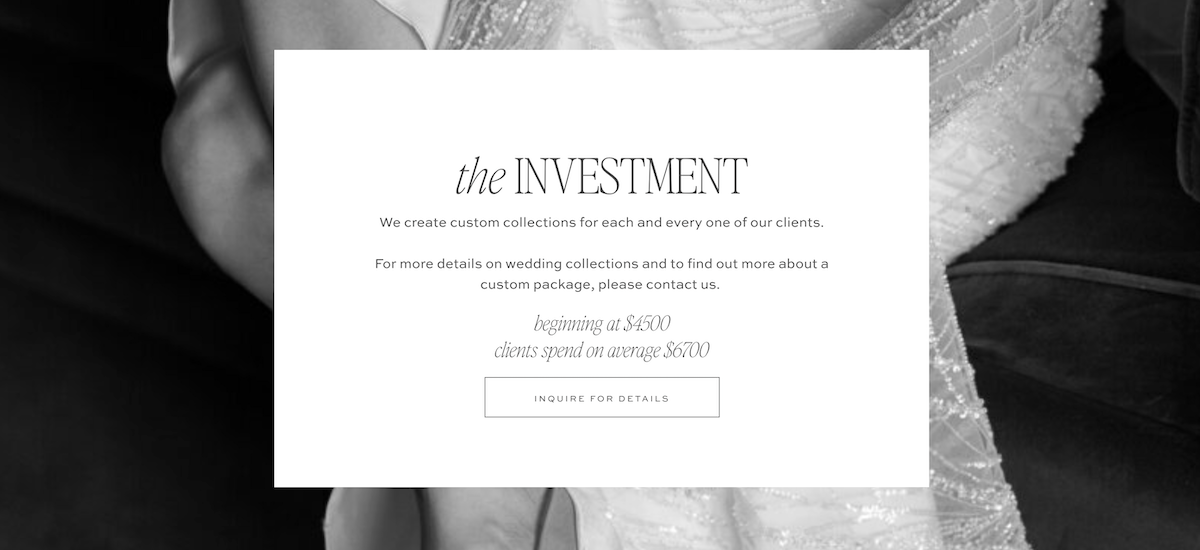
Price the middle tier to be the obvious choice. The entry tier should feel slightly limited. The premium tier should feel like a significant investment. The middle tier should feel like exactly what a serious business owner would choose, because it genuinely is.
What Goes in the Contract vs. the Proposal?
Your proposal is where you describe the deliverables, the timeline, and the investment. It’s the document that gets a client excited and helps them say yes to your web design package.
Your contract is where you protect yourself and your client. It defines what’s included, what’s not, how many revision rounds are covered, what happens if the project stalls, how and when you get paid, and what your cancellation policy is.
Never start a project without both. The proposal starts the relationship on the right foot. The contract keeps it there when things get complicated. And they will get complicated eventually, which is exactly why the contract exists.
If offer packaging is the part of your web design business that still feels unclear, it’s the first thing we work through inside Design Strategy School. The offer structure, the tiers, the language to present it all confidently, it’s built into the curriculum because without it, everything else in your design business is harder than it needs to be.
FAQ
What’s included in a web design package?
A complete web design package includes strategy and site mapping, the design itself, build and launch, a defined number of revision rounds, basic SEO setup, a training handoff, and a 30-day support window. Copywriting, ongoing maintenance, and photography should be sold separately rather than included in the base package.
Should copywriting be part of a web design package?
Only if you’re genuinely skilled at writing conversion-focused copy and have priced the project to account for the additional time. For most designers, providing writing prompts and guidance for each section is a more sustainable approach that delivers real value without adding open-ended scope to the project.
How many pages should a web design package include?
Five to seven pages is the right baseline for a service-based business web design package. Homepage, about, services, portfolio, and contact cover the full client journey. Additional pages should be priced as add-ons with a clear per-page rate included in your pricing guide.
How do I create good, better, best web design packages?
Build three tiers with the middle tier positioned as the obvious choice. Price the entry tier between $2,500 and $4,000, the core tier between $4,500 and $7,500, and the premium tier at $8,000 and above. The middle tier should be the one you can deliver most efficiently and profitably, and it should feel like the smart, professional decision for a serious client.

Krista is the co-founder of Davey & Krista, a creative studio known for high-converting Showit website templates crafted for photographers, creatives, and entrepreneurs. With over 15 years of branding and marketing experience, she helps business owners launch stunning websites without the tech overwhelm. Krista also teaches designers how to turn their creative skills into a thriving business—through templates, courses, and behind-the-scenes strategy. When she’s not designing, you’ll find her chasing sunshine, color palettes, and gluten-free pizza.
Explore website templates and free resources at daveyandkrista.com.


VIEW THE COMMENTS
Add A Comment