


Table of Contents
Hourly, Flat Rate, or Value-Based: How Should Designers Price Their Work? If you are still billing hourly and you have been designing for more than six months, this post is going to make you a little uncomfortable. In the best possible way.
Davey and I still talk about the early days of running our studio, when we were second-guessing our pricing, our process, and honestly whether we were even doing any of it right. We were talented. We worked hard. But the way we were charging for our work was quietly working against us, and it took us longer than I’d like to admit to figure that out.
The thing nobody tells you about billing by the hour is this: the better you get at your job, the less you earn. You get faster, you get more efficient, you get genuinely good at what you do, and your income goes down. That is completely backwards.
Flat-rate project pricing is the right default for almost every independent designer, because hourly billing punishes you for getting faster and caps your income at the number of hours in your week. Hourly still makes sense for open-ended maintenance and consulting. Value-based pricing makes sense once you can point to revenue your work actually generated.
But let me walk you through all three, because understanding the difference is genuinely one of the most valuable things you can do for your business right now.
What’s the Difference Between Hourly, Flat Rate, and Value-Based Pricing?
These three models are genuinely different, and understanding what each one actually is helps you choose the right one instead of defaulting to whatever feels familiar.
Hourly pricing means the client pays you for your time. You track your hours, multiply by your rate, and send an invoice. Simple in theory. Complicated in practice, because the client never quite knows what the final number will be, and honestly, neither do you. That uncertainty creates a low-level tension in every client relationship that most designers don’t even notice until they’ve switched away from it.
Flat-rate pricing means the client pays a fixed amount for a defined scope of work. You deliver a five-page website for $3,500. Done. They know the number before they sign. You know the number before you start. The incentive shifts completely: instead of logging more hours, you’re incentivized to work efficiently and deliver an excellent result. That alignment changes everything about how a project feels.
Value-based pricing means you price based on what the work is worth to the client’s business, not on how long it takes you to complete. A website that helps a wedding photographer consistently book $10,000 packages is worth more than one that helps someone sell $50 products, even if the design hours are identical. Value-based pricing asks: what is this site actually supposed to do, and what is that outcome worth? It’s the most advanced model, and it’s not where most designers should start. But it’s worth understanding where it leads.
Why Does Hourly Pricing Hurt Designers Who Are Getting Better?
This is the part that I wish someone had sat me down and explained clearly when I was starting out.
When you bill by the hour, you are directly penalized for becoming more skilled. A logo that took you twelve hours in year one takes you four hours in year three. If you’re billing hourly at the same rate, you just gave yourself a 67% pay cut for getting better at your job. And if you’ve raised your hourly rate to compensate, you’ve created a new problem: clients start to feel the meter running. Every small request, every quick revision, every “can you just change this one thing” carries a financial implication that both of you are aware of.
That tension is not a great environment for creative work. And it’s one of the main reasons designers who stay on hourly pricing for too long find themselves working harder and earning about the same, or sometimes less, than they did when they started.
Flat-rate pricing removes that tension entirely. The scope is defined. The price is set. You can focus on doing great work instead of tracking minutes. And your clients can ask questions and give feedback without worrying that every interaction is costing them money.
When Does Hourly Still Make Sense?
I want to be fair here, because hourly is not always wrong. There are specific situations where it’s genuinely the right model.
Ongoing maintenance and site updates. When a client needs occasional help but the scope genuinely varies month to month, an hourly rate or a small retainer makes more sense than a flat project fee. You cannot price a flat rate on work that hasn’t been defined yet.
Strategy and consulting calls. If someone is paying for your thinking, not a deliverable, an hourly or flat session fee makes sense. A two-hour strategy call is a contained, clear scope. Price it that way.
Brand new client type, unclear scope. If you’re taking on a project outside your usual niche and you genuinely don’t know how long it will take, hourly protects you while you figure it out. Use that project to gather the data you need to price it flat next time.
Small, one-off requests from existing clients. A quick revision, a new page added six months after launch, an asset update. These don’t need a full project agreement. A simple hourly rate for small add-ons keeps the relationship clean and easy.
The rule I use: if the scope is clear and the deliverable is defined, price it flat. If the scope is genuinely open-ended, hourly or a retainer protects both of you.
What Is Value-Based Pricing, Really?
Value-based pricing has become one of those phrases that gets thrown around a lot without anyone actually explaining what it means in practice. So let me cut through the jargon.
It is not a mystical percentage of a client’s revenue. It is not a formula you plug numbers into. It is simply asking: what is this website supposed to do for this business, and what is that outcome worth?
A photographer booking one additional $8,000 wedding package because of her new website has received enormous value from that project. A coach selling one online course at $2,000 has received measurable value. Value-based pricing looks at those outcomes and asks: given what this site is supposed to generate, what is a reasonable investment for the client to make in building it?
The reason most designers aren’t ready to use value-based pricing early on is that you need to be able to have a direct, confident conversation about business outcomes with your client. You need to understand what they’re trying to achieve, what a win looks like for their specific business, and how your design work contributes to that result. That conversation requires experience, confidence, and a track record.
Start with flat-rate pricing. Build your process. Develop your niche. Once you have a body of work and a clear sense of the outcomes you consistently create for clients, value-based pricing becomes a natural next step. It is not a beginner model. It is a reward for the work you’ve already done to get genuinely good at this.
How Do I Move From Hourly to Flat Rate Without Losing My Current Clients?
This is the question I get most often, and the good news is that the transition is more manageable than it feels right now.
Start with new clients, not existing ones. Your next inquiry gets a flat-rate proposal. That’s it. You don’t have to announce a policy change or have a difficult conversation with anyone. You simply start presenting your work differently going forward.
For existing clients who are used to hourly billing, here’s a script that works:
“I’ve been thinking about how we work together, and I want to make it simpler for both of us. Going forward, I’d love to offer you a set project rate so you always know the investment upfront rather than getting a variable invoice. Here’s what that looks like for your next project.”
Most clients respond positively to this. Predictability is good for them too. And if a client pushes back because they preferred the hourly model, that’s useful information about whether this client is the right fit for where your business is heading.
Raise your effective hourly rate at the same time you make the switch. If you’ve been billing $75/hour and a project takes you fifteen hours, you’ve been charging $1,125. Your flat rate for that same project should be $1,500 to $2,000, because the flat rate includes the value of the certainty you’re providing, not just the time.
How Do I Estimate a Flat Rate Without Losing Money?
This is where a lot of designers get nervous, and understandably so. Getting the estimate wrong on a flat-rate project means you absorb the difference. Here’s the method that actually works.
Track your hours on your next three projects, even if you’re not billing them. Don’t show the client. Just track. At the end of each project, you’ll know how long it actually took, including client calls, revisions, file organization, and handoff. That number is almost always higher than designers initially expect.
Once you have your real hour count, price the outcome, not the hours. Take your actual hours, multiply by the rate you want to earn, and add a 20% buffer. That buffer covers the revision round you didn’t anticipate, the client who goes quiet for two weeks and then comes back with fifteen questions, the scope conversation you have to navigate.
A project that takes you eighteen real hours at a $100 effective rate is an $1,800 project. Add your 20% buffer and you’re at $2,160. Round to $2,200 or $2,500 depending on the scope and deliverables, and you have a flat rate that actually works for your business.
Do this for three or four project types and you’ll have a pricing foundation you can rely on instead of guessing every single time.
Pricing is almost always the thing that keeps designers stuck the longest, and it was true for us too. It’s the first thing we fix inside Design Strategy School, because everything else, your clients, your projects, your income stability, flows from getting this part right. The framework we teach is the same one we used to go from second-guessing every number to running a studio with clear, confident pricing on every project. And no it’s not just about designing templates in Showit.
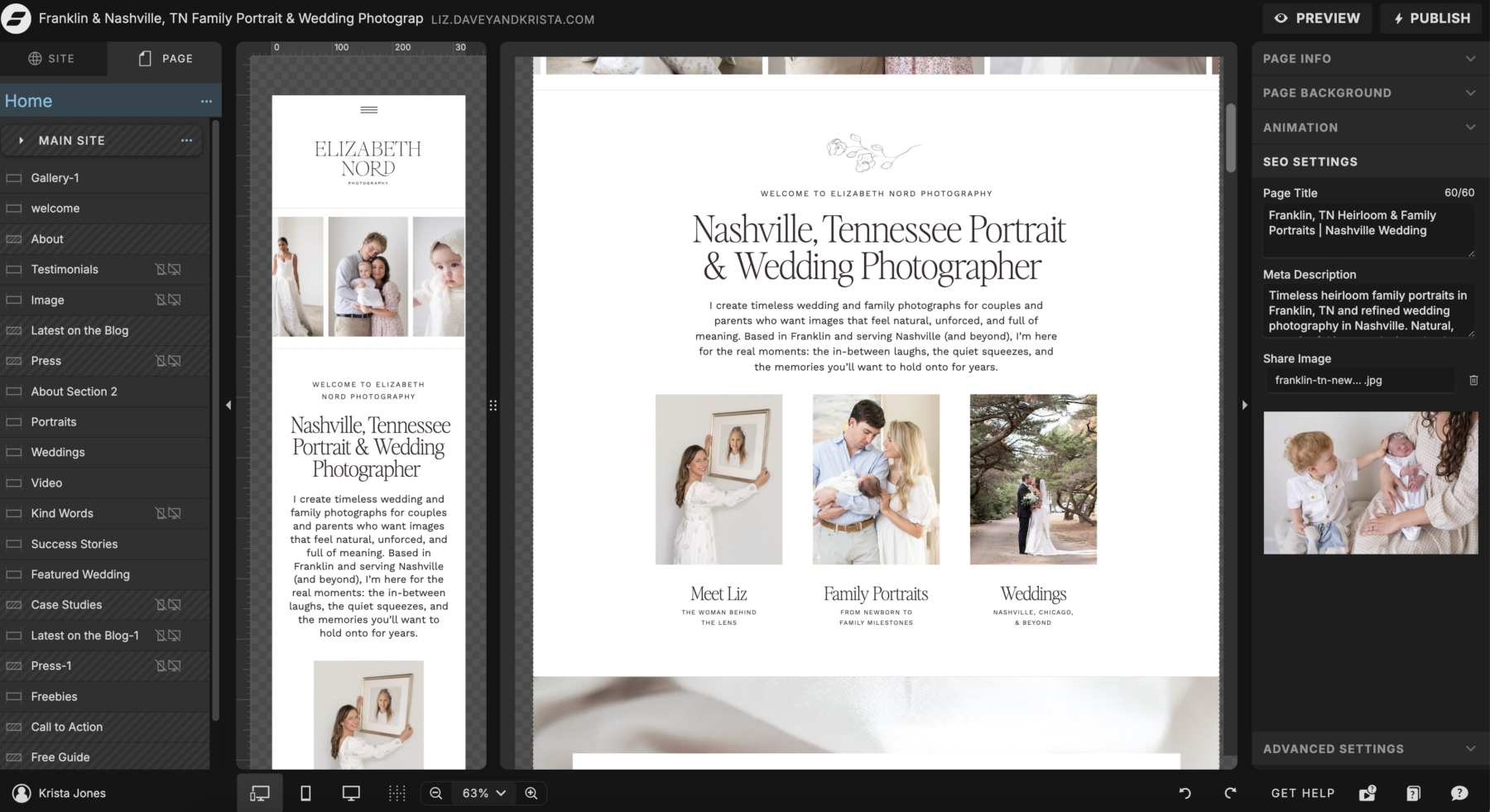
If you’re not quite ready for the full course, Booked by Design is a focused, practical class that covers the core of this in a single session. A great place to start.
FAQs
Should designers charge hourly or flat rate?
Flat-rate pricing is the right default for almost every independent designer. Hourly billing punishes you for getting faster, creates financial tension with clients around every small request, and caps your income at the hours in your week. Hourly still makes sense for open-ended maintenance, strategy calls, and projects with genuinely unclear scope.
What is value-based pricing for designers?
Value-based pricing means pricing based on what the work is worth to the client’s business, not on how long it takes you to complete. It requires understanding what the client is trying to achieve and what a successful outcome is worth to them. It’s the most advanced pricing model and works best once you have a track record of real results you can point to.
How do I switch from hourly to flat-rate pricing without losing clients?
Start with new clients, not existing ones. Present your next inquiry with a flat-rate proposal and let the transition happen naturally. For existing clients, frame it as a simplification that benefits both of you: they get pricing certainty, you get clarity on scope. Most clients respond positively to the change.
How do I estimate a flat rate accurately?
Track your real hours on three to four projects without billing them, then price the outcome rather than the hours. Take your actual time, multiply by your desired effective rate, and add a 20% buffer for the unexpected. That buffer is what keeps a flat-rate project profitable instead of costly.

Krista is the co-founder of Davey & Krista, a creative studio known for high-converting Showit website templates crafted for photographers, creatives, and entrepreneurs. With over 15 years of branding and marketing experience, she helps business owners launch stunning websites without the tech overwhelm. Krista also teaches designers how to turn their creative skills into a thriving business—through templates, courses, and behind-the-scenes strategy. When she’s not designing, you’ll find her chasing sunshine, color palettes, and gluten-free pizza.
Explore website templates and free resources at daveyandkrista.com.


VIEW THE COMMENTS
Add A Comment