


Table of Contents
If you’d told me a few years ago that I’d walk away from fully custom website work, I would have laughed.
Custom design was the part of the job I loved most. The blank canvas. The challenge of building something from nothing that felt completely specific to one person’s brand and vision. There’s a particular kind of satisfaction in delivering a fully custom website that looks like nothing else out there.
And yet. Here we are.
Stepping back from fully custom website projects was one of the best business decisions I’ve ever made, and it took me longer than I’d like to admit to get there. This is the honest version of why.
What a Fully Custom Website Actually Costs
I don’t mean financially, though we’ll get to that.
A fully custom website starts from zero every single time. Every layout, every section, every design decision is invented from scratch. That’s not a flaw in the process. It’s just what the process is.
And creative energy is finite. I started noticing that each fully custom website was drawing from the same well, and the more I took on, the longer that well took to refill. That’s when I knew something needed to change.
The Question That Changed How I Thought About My Work
At some point I started asking myself a question I couldn’t un-ask.
What if I took the same creative energy that goes into one fully custom website and built something that could serve hundreds of clients instead of one?

Not a lesser version of the work. The same strategy. The same intentionality. The same level of design thinking. Just built once, refined over time, and made available to the kind of clients who want a beautiful, strategic website without the timeline and investment of a fully custom build.
That question is what led us to shift toward templates. And it changed everything.
What Templates Actually Are (And What They Aren’t)
I want to be clear about something, because there’s a version of this story that makes it sound like templates are a shortcut. They’re not.
When we design a new Showit template, we’re investing the same level of creative energy that a fully custom website would require. The strategy is there. The layout decisions are considered. The typography, the spacing, the section flow, all of it is built with intention.
The difference is that the work doesn’t end with one client. That template becomes an asset. It keeps working. It keeps serving. And the strategy we poured into it reaches hundreds of business owners instead of just one.
From a business perspective, the math is hard to argue with. A single fully custom website project generates revenue once. A well-built template generates revenue for years.
But honestly, the financial case was almost secondary to something else I discovered.
Why Templates Are Often Better for Clients
This is the part that surprised me most.
When a client comes to you for a fully custom website, they’re staring at an open-ended question with no visual reference point. They have to imagine what their site could look like, describe it in words, and trust that you’re interpreting those words correctly. That’s a lot of creative pressure on both sides.
When a client starts from a thoughtfully designed template, they have something tangible to respond to. They can see the structure, react to the layout, and point to what resonates and what they want to adjust. The conversation becomes so much more productive, and the design process moves forward with more clarity and less guesswork.
Starting from a template doesn’t mean settling for something generic. A well-built Showit template starts with a proven foundation and directs all the creative energy toward making it feel completely specific to that client’s brand. The result is a website that’s still strategic, still distinctive, and still genuinely theirs, just built on a smarter starting point.
What Doubled Our Capacity
Without fully custom website projects anchoring the calendar, something unexpected happened.
There was space. Space to build more templates, develop more education, create more resources, and say yes to opportunities that used to get crowded out by the weight of custom timelines. The creative work didn’t shrink. It multiplied, just in a direction that compounded instead of reset.
That’s the part of the fully custom website conversation nobody talks about: it’s not just what you gain by stepping back. It’s what you finally have room to build.
What This Means for You
If you’re a designer considering whether to offer fully custom website work, I’m not here to tell you not to. Custom design is incredible work and there’s real value in it.
But if you’re feeling the weight of it, if each fully custom website project is leaving you depleted rather than energized, it might be worth asking the same question I did. Is there a way to put this creative energy somewhere it compounds rather than resets every time?
For us, the answer was templates. For you, it might look different. But the question is worth sitting with.
And if you want to understand how to build a design business that doesn’t depend on fully custom website work to stay profitable, that’s exactly what our Design Strategy School course digs into. The business model, the pricing, the process, and how to build something that actually scales.
If you’ve been waiting for the right time to explore it, this is a good one.
One More Thing
The websites we make as a result of this shift aren’t less beautiful than a fully custom website. In many cases they’re more considered, because the design decisions have been tested, refined, and lived in by real businesses.
What changed is the model behind them. And that change gave us back something that fully custom website work was quietly taking: the ability to do more of the work we love, for more of the people we’re here to serve.
Browse our Showit templates to see what that looks like in practice. And if you’re ready to build a design business that works for you, come join us in Design Strategy School.
FAQs: Fully Custom Website Design
What is a fully custom website?
A fully custom website is designed from scratch with no pre-built template or framework as a starting point. Every layout, section, and design decision is made specifically for one client’s brand. It offers complete creative freedom but requires significant time, investment, and creative energy.
Is a fully custom website worth it?
It depends on your goals and budget. A fully custom website offers a truly unique design, but it comes with a higher investment and longer timeline. For many creative business owners, a professionally designed template that’s been thoughtfully customized delivers comparable results at a fraction of the cost.
What’s the difference between a custom website and a template?
A fully custom website starts from a blank canvas and is built specifically for one client. A template starts from a professionally designed foundation and is customized to reflect a specific brand. High-quality templates, like those built on Showit, offer significant design flexibility and can look completely original once personalized.
Can a template-based website look as good as a fully custom website?
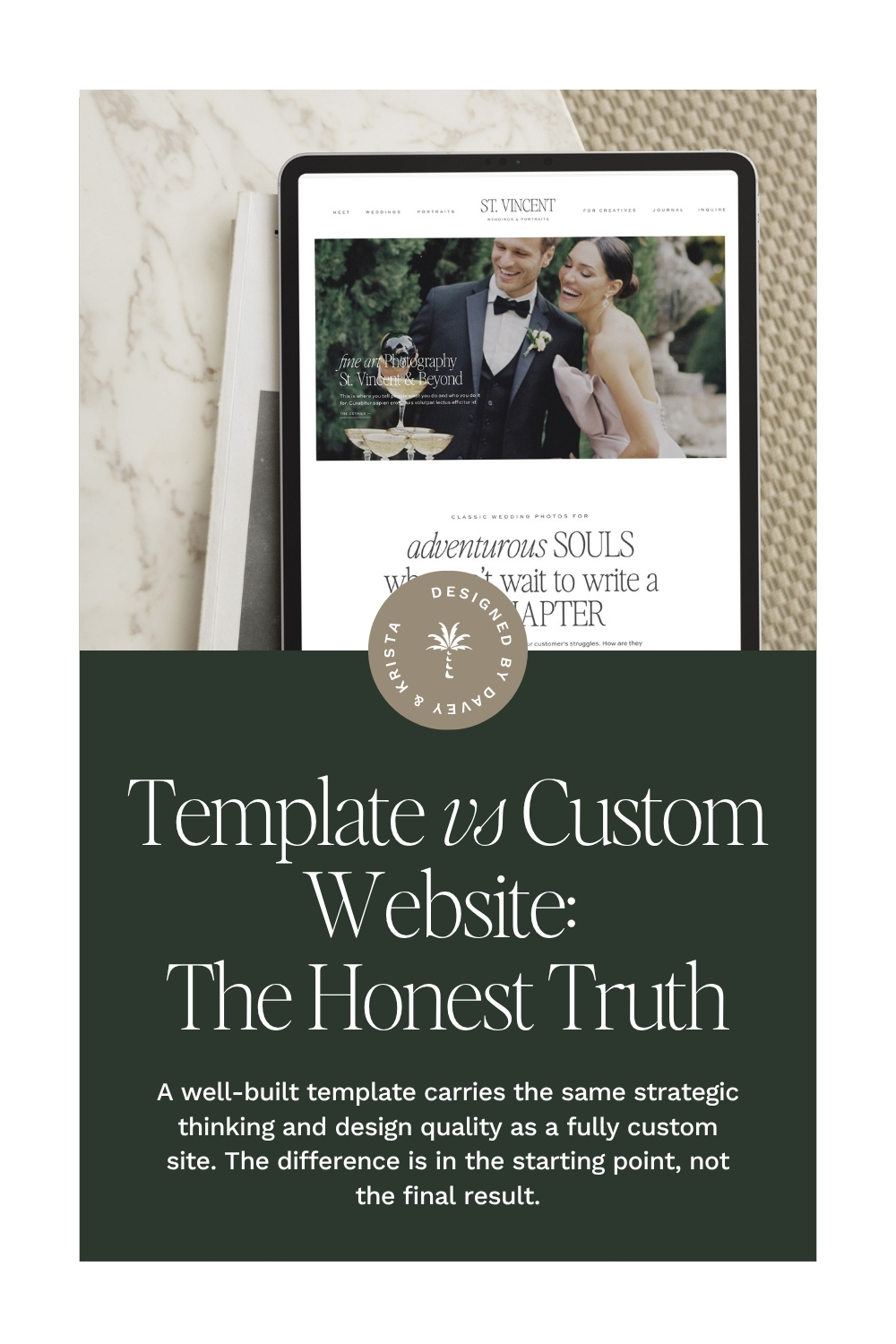
Absolutely. A well-designed Showit template built by an experienced designer carries the same strategic thinking and design quality as a fully custom website. The difference is in the starting point, not the final result.
How can I build a design business without relying on fully custom website projects?
Our Design Strategy School course covers exactly this, including how to structure your offerings, price your work, and build a business model that doesn’t depend on high-overhead fully custom website projects to stay profitable.

Krista is the co-founder of Davey & Krista, a creative studio known for high-converting Showit website templates crafted for photographers, creatives, and entrepreneurs. With over 15 years of branding and marketing experience, she helps business owners launch stunning websites without the tech overwhelm. Krista also teaches designers how to turn their creative skills into a thriving business—through templates, courses, and behind-the-scenes strategy. When she’s not designing, you’ll find her chasing sunshine, color palettes, and gluten-free pizza.
Explore website templates and free resources at daveyandkrista.com.


VIEW THE COMMENTS
Add A Comment