


One of the biggest mistakes we see businesses make is trying to create a brand based on their own interests. We’ve fallen into this trap before ourselves.
Our business was new and we weren’t really sure what the visuals should look like, so we mixed a few our favorite colors with a few of our favorite objects and voila- a brand.
Or so we thought.
What we didn’t realize at the time is that our ideal clients likely care more about themselves and their own interests than the fact that Krista loves to garden and Davey enjoys a long run.
Over the years, we’ve learned that the strongest brands appeal to their ideal clients by anticipating their hopes, dreams and fears and then creating both a business and a brand that appeal to them.
The best brands choose a very specific person to serve.
It’s really impossible to serve everyone and do it well. Even major brands like Target and Apple don’t try to appeal to everyone. Some people prefer upscale, boutique brands to budget shopping and some people will always be Microsoft people.
Case Study: Little Z Sleep
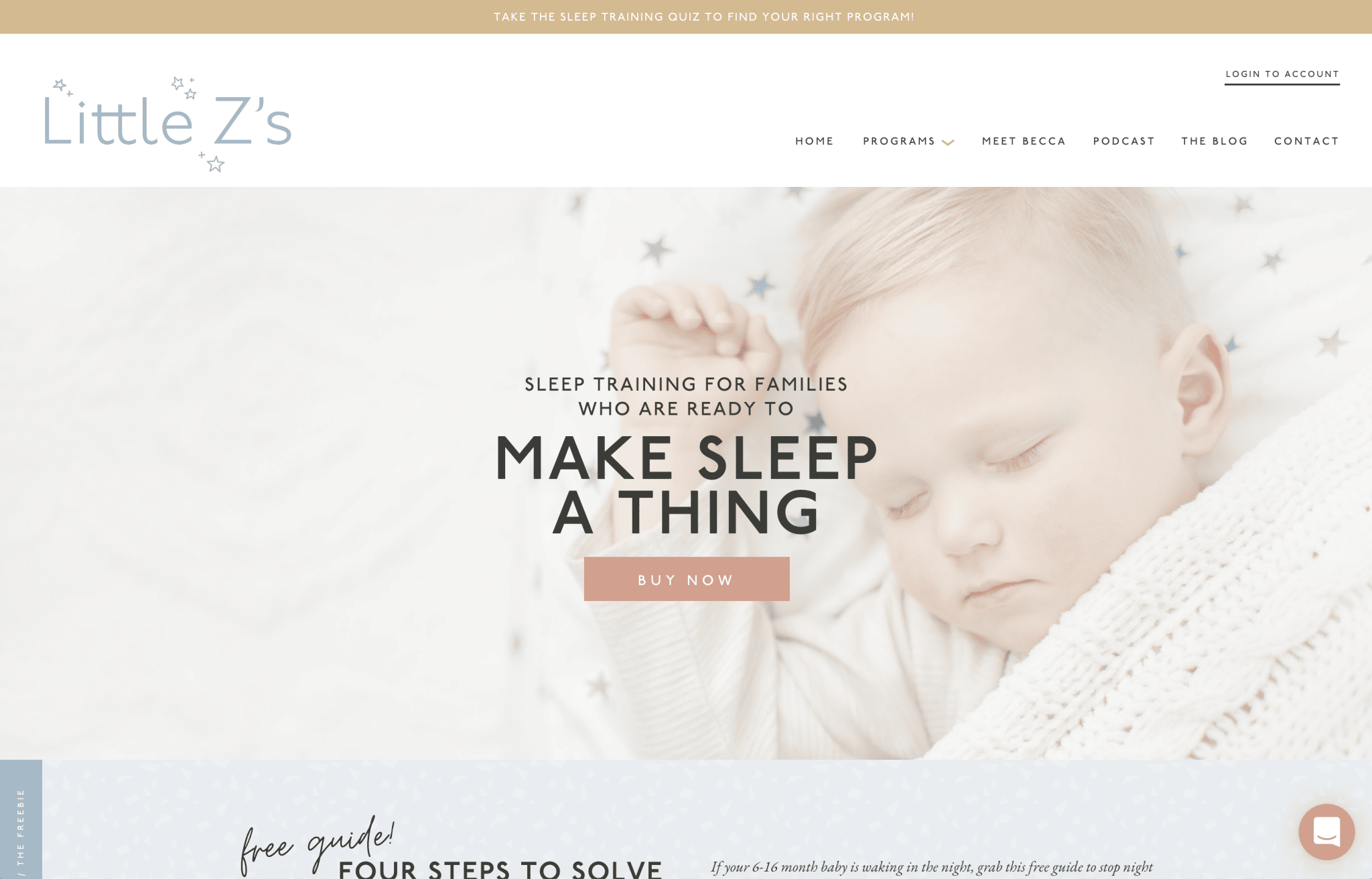
Newborn sleep consultant Becca Campbell of Little Z Sleep does this very well. Her brand’s tagline is “Make Sleep a Thing”. From the moment someone (likely an overly tired and frustrated parent) visits her website or comes across a piece of her content, they’re already met with the message that sleep actually is possible. That life may be hard right now but things can be different.
Becca’s brand colors are soft yet contemporary and the images she uses would look right at home in a nursery. With the vast sleep knowledge Becca has she could likely help just about anyone get better sleep, but she chooses to focus on helping parents of newborns, toddlers and preschoolers.
Becca is an incredibly interesting person and she very easily could have created a brand based on “Becca”, but one of the reasons she is so successful is because her brand is built entirely around appealing to her ideal clients and their pain points.
If you want to dive more deeply into crafting messaging that will resonate with your ideal clients, we can’t recommend Donald Miller’s Building a StoryBrand enough!
Create an Avatar
When we advise our branding clients to think about their audience, we recommend thinking about a very specific person. Where does this client shop? How do they spend their free time? What kind of art decorates their walls? How old are they? Where do they work? What do they do in their free time?
Let’s pretend that I’m a newborn photographer in the Richmond, Virginia area. I might describe my ideal client like this:
My ideal client is a soon-to-be or brand new mama. She’s in her late twenties, has been married for a couple of years and still shares photos from her wedding on Instagram at least once a month. Several of her friends have already had children and she has a checklist of all the things she needs to do before, and after, her baby arrives. She knows this season will go quickly and she wants to make sure it’s captured as beautifully as her wedding.
She has a job she loves but she’s not sure if she’ll head back to her career after the baby arrives. She has a household income that allows her to be flexible with the decision to work full time, part time or not at all.
She’s college-educated, informed and always aware of the latest trends – even though she’s careful with how she implements them. A minimally-designed home (her first one!) with neutral colors—yes! Bike shorts—no.
She’s looking for bright images with somewhat muted colors that will look beautiful among the wedding prints + abstract art and travel photos that hang on her walls.
Her weekends are filled with dinner parties with her couple friends, weekend trips to small towns, the occasional European adventure and church on Sundays.
See what we did there? Can you picture this ideal client? The more specific we can be, the easier it’s going to be to target this client. You’re already probably picturing what her home looks like, where she shops, and the kind of values she has. Maybe you’re even thinking about the way she speaks and the kinds of images she shares on social media.
If I pulled a few visuals from this client’s life, they might come together to create a mood board like this:
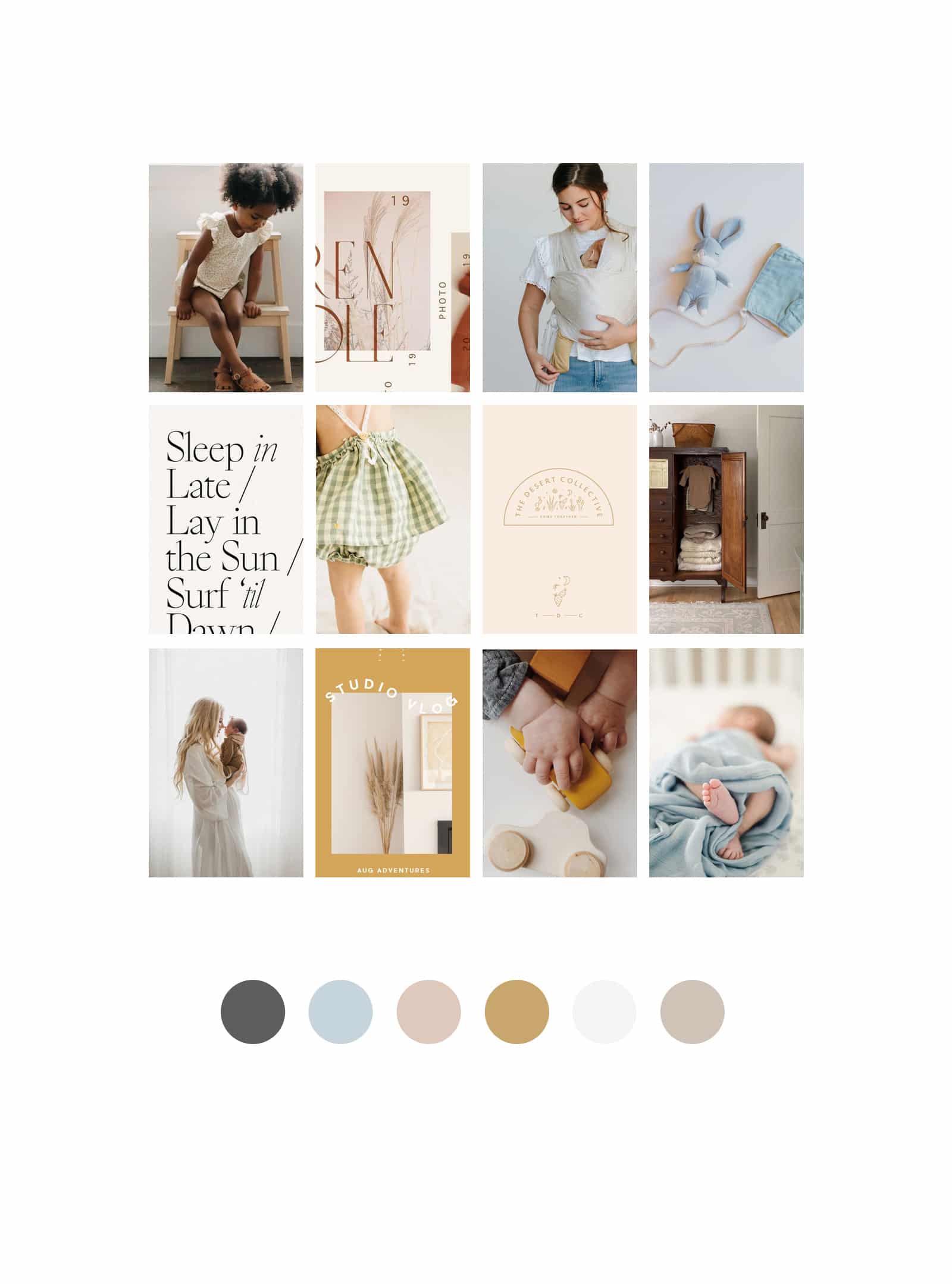
Want to learn how to create a mood board like this? Check out this post »
When you understand who your ideal client is, it’s easier to pull together an aesthetic, language, and overall brand that will appeal to her.
We’ll continue with these posts over the next few weeks, but if you want to dive more deeply into what makes a strong brand, check out our FREE Anatomy of a Brand Guide.

The Anatomy of a Brand
We’ve all heard that brands are important, but with so much content out there about brands, it can be hard to figure out exactly what a brand is—let alone how to come up with a solid one for your business.

Krista is the co-founder of Davey & Krista, a creative studio known for high-converting Showit website templates crafted for photographers, creatives, and entrepreneurs. With over 15 years of branding and marketing experience, she helps business owners launch stunning websites without the tech overwhelm. Krista also teaches designers how to turn their creative skills into a thriving business—through templates, courses, and behind-the-scenes strategy. When she’s not designing, you’ll find her chasing sunshine, color palettes, and gluten-free pizza.
Explore website templates and free resources at daveyandkrista.com.


VIEW THE COMMENTS
Add A Comment